The big news this past weekend that got the LEGO community both nervous and excited is that the BrickLink, the Unofficial Online LEGO Marketplace has been sold. As you probably know the founder of BrickLink, Daniel Jezek, passed away 3 years ago (see links at the end of this post), and since then his family has been maintaining the website.
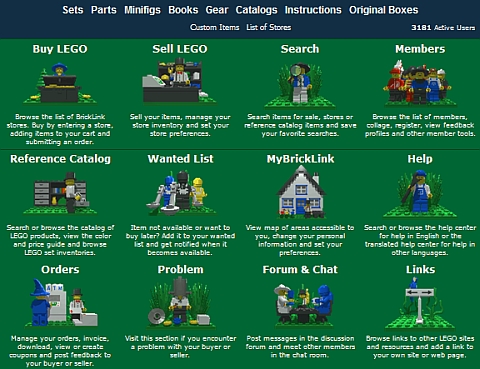
Dan’s family was able to keep BrickLink running, however it was not within their capacity to continue with necessary updates and upgrades. The site was also hacked several times. Due to all of the above Daniel’s family decided to sell BrickLink. Below is a message from Dan’s mother to the BrickLink LEGO fan community. (See original here.)

About a week ago I posted a special message to thank all of you for supporting us over the nearly three years since my son Dan died. I thank all those who sent personal messages to me about what BrickLink has meant to them. In my message, I mentioned some progress we made, and also the challenges we faced. Good news remaining is that, despite the challenges, business has been brisk and even impressive. When I took over the website in the name of my son, the representational visitor log (front page of BrickLink) was at about 50 million visitors. Today, it is at nearly 144 million visitors and counting. Nearly two-thirds of all those who visited BrickLink over the 13 years since its inception have arrived here in the short time we’ve run BrickLink.com. Also, we’ve partnered with security experts and have been able to make the website safer than it has ever been. I’m proud of these facts and I again thank all of you for your patience in sticking with us to this day.
But it’s a new era, and much needs to be done to bring BrickLink to a higher level and to become the site whose potential all of you see and we want to reach as well. Thus, I am announcing that I am stepping down as CEO of BrickLink and have handed the website over to the committed and competent hands of a new owner, Jung-Ju “Jay” Kim, founder of Nexon, one of the world’s largest online game companies.
I completely endorse Jay to take the reins of BrickLink. He has the knowledge, resources and capabilities needed for the job. He has a passion, not just for all things LEGO, but also for BrickLink. Like most of you, he has been a member of the community for years. He has tremendous respect for what Dan accomplished while he was alive. He also has a compelling desire to carry forward Dan’s vision and his guiding principles that were laid down more than a decade ago. Jay and his team are ready to work toward “BrickLink 2.0”, as well as continuing hardware architecture and application upgrades.
It’s a bright future for BrickLink, and I intend to be a part of it along with the rest of the BrickLink Community. Larry and I will be staying on in an advisory-consulting role to the new owners. Eric Smith will be staying on as Admin to ensure a smooth, seamless transition with minimal interruption. Part of that transition will include relocation of the BrickLink site to a different data center. Later today you will learn more about that server relocation and the migration schedule, which has been carefully designed to minimize downtime.
It’s been a great three years. I did my best and I am sorry that the hacking incidents waylaid us from doing more, earlier. I am proud of the amazing growth of BrickLink, thanks to all of you. As hard as it was to give up our treasured BrickLink that Dan loved so much, I felt it was the right thing to do, not for me, but for the Community. And, as always, it is that worldwide community that matters to me most, just as it mattered to Dan. That is why I am passing the torch to new leadership. It is what Dan would have wanted me to do.
As I mentioned, I will remain on with BrickLink and will act as an ambassador and link to BrickLink’s lineal past. Please feel free to contact me any time at eliska@bricklink.com. I still want to hear from you. Thank you and let’s all look forward to tomorrow. Best regards, Eliska Jezkova, former CEO of BrickLink.com
And below is a message from Jung-Ju “Jay” Kim, a billionaire from South Korea, founder of the online game company Nexon, and incoming owner of BrickLink.com. (As of June 5th, the Hong Kong-based company Bricklink Limited has acquired the assets of BrickLink.com. Bricklink Limited is a subsidiary of NXMH.) You can read more about Jay at Forbes’ list of billionaires: Jung-Ju Kim Profile
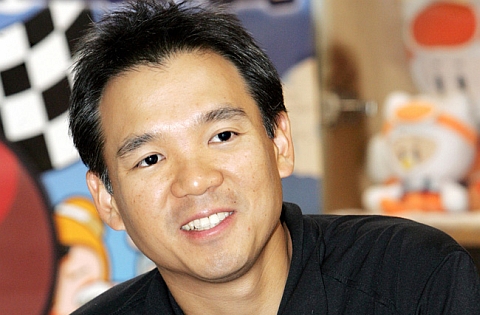
Dear BrickLink Community, I am extremely pleased to be taking over the operations of BrickLink.com. I’ve been a LEGO fan for 40 years and an avid user of BrickLink.com for over a decade. My first plans are to upgrade the website, and do our best to make users happier and more prosperous, while staying true to the original vision of BrickLink.com founder, Daniel Jezek. We will work hard in order to ensure that BrickLink.com becomes stable, secure and as user-friendly as possible.
I want to sincerely thank the family of Daniel Jezek, especially his mother Eliska, as well as the BrickLink.com Community, for the opportunity to upgrade and operate such a beloved website as BrickLink.com. In order to expedite the process of renovating BrickLink.com, I and Bricklink Limited will be asking users to e-mail us with their ideas for the improved functionality of the site, as well as any current issues that need to be addressed in order to provide users with the best possible selling and buying experience. We’ll establish those lines of communication very soon. Thank you for your continued patronage and support of BrickLink.com. Jung-Ju Kim, incoming owner of BrickLink.com
LEGO fan’s reaction to the sale of BrickLink has been mixed. BrickLink is practically the second home of many LEGO fans and they depend on the site for their LEGO projects and displays. On the one hand there is great excitement that finally someone will take over the site who has the knowledge and resources to bring it up-to-date as far as security and also (hopefully) implement much requested new features, and freshen up that outdated look. On the other hand there are concerns that the website has been transferred over to a huge, publicly traded company – which means there is great pressure to focus on increasing revenue, instead of the community aspect of the site. Pretty much what happened to eBay that turned from a community site to a giant corporation with astronomical fees that only benefit shareholders. Anyhow, all we can do is wait and see at this point. The site has already been transferred over to a Hong Kong based server and work on BrickLink 2.0 will begin shortly to replace the old site.

So what do you think? Are you a regular BrickLink user yourself? How do you feel about the sale of BrickLink, and what do you think its future will be like? What features would you like them to implement and which ones do you hope they keep? Feel free to share your thoughts and discuss in the comment section below. 😉
And you may also like to check out the following related posts: