
Finally we have a chance to see the LEGO Ninjago 2012 summer sets, thanks to LEGO-fans who have taken pictures and videos at the recent toy-fair in Nurnberg, Germany! (Images courtesy of www.spieletest.at.)
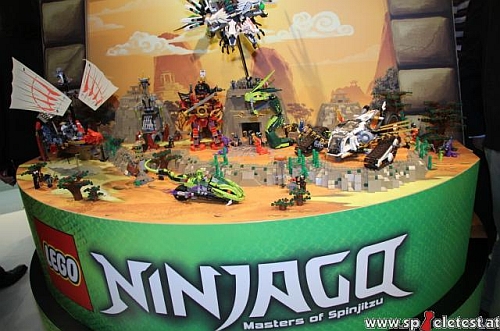
Below is an overall picture of the LEGO Ninjago display at the German toy-fair with the Ninjago summer sets (click image for larger view):
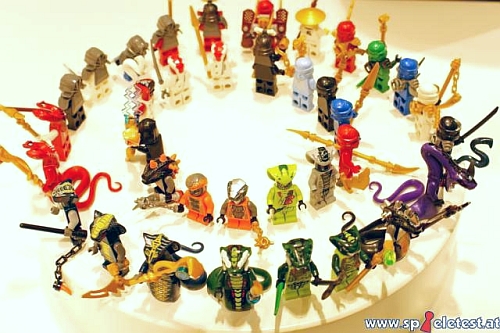
And here is a display of the LEGO Ninjago minifigures. Just look at those amazing snake-generals! And yes, there is the long-awaited Green Ninja! 😀
Below find close-ups of the LEGO Ninjago summer sets. You can click on each of the images for a larger view. I really like the whole set-up with the background mountains and caves. I wish the sets would include those! 😉
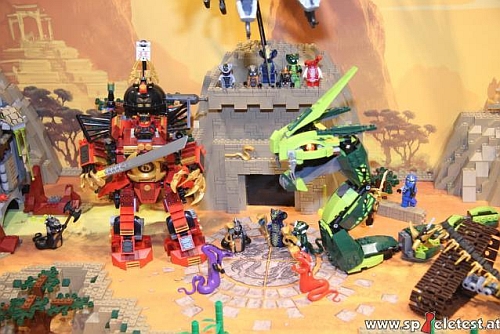
➡ #9448 LEGO NINJAGO Samurai Mech – In my opinion, besides the #2507 LEGO Ninjago Fire Temple, this is the best LEGO Ninjago set! That mech is just incredible! This set also features a small snake-catapult to launch the 2 snakes that appear in the set. Includes 3 minifigures: Samurai X, Bytar and Snike. Estimated price: $39.99
➡ #9449 LEGO NINJAGO Ultra Sonic Raider – The Ninja’s cool new toy! It also has some really interesting moving parts! (Check out the video below.) Set includes Ultra Sonic Raider, Fangpyre fang-blade with red anti-venom capsule, 4 golden weapons and 5 regular weapons. Includes 6 minifigures: Cole ZX, Jay ZX, Kai ZX, Zane ZX, Pythor and Spitta. Estimated price: $69.99

➡ #9450 LEGO NINJAGO Epic Dragon Battle – That is one awesome-crazy 4-headed dragon! Set features Ultra Dragon, The Great Devourer (the green snake from the picture with the samurai robot), snake-prison, Hypnobrai fang-blade with blue anti-venom capsule, 4 golden weapons and 7 regular weapons. Includes 7 minifigures: Lloyd ZX, NRG Jay, Sensei Wu, Lord Garmadon, Acidicus, Skalidor and Chokun. Estimated price: $119.99

➡ #9447 LEGO NINJAGO Lasha’s Bite Cycle – This is the small green vehicle at the bottom of the first image. Besides the Bite Cycle the set also features a blacksmith-forge, Venomari fang-blade with green anti-venom capsule, golden weapon and 5 regular weapons. Includes 2 minifigures: Cole ZX and Lasha. Estimated price: $24.99
And finally, here is a video of all the upcoming LEGO Ninjago summer sets:
So far 2012 has been an excellent year for Ninjago! It seems like LEGO has gone all out to dazzle Ninjago fans with some amazing sets! What do you think? Share your thoughts in the comment section below. 😉
Here are some other posts on LEGO Ninjago you may be interested in: